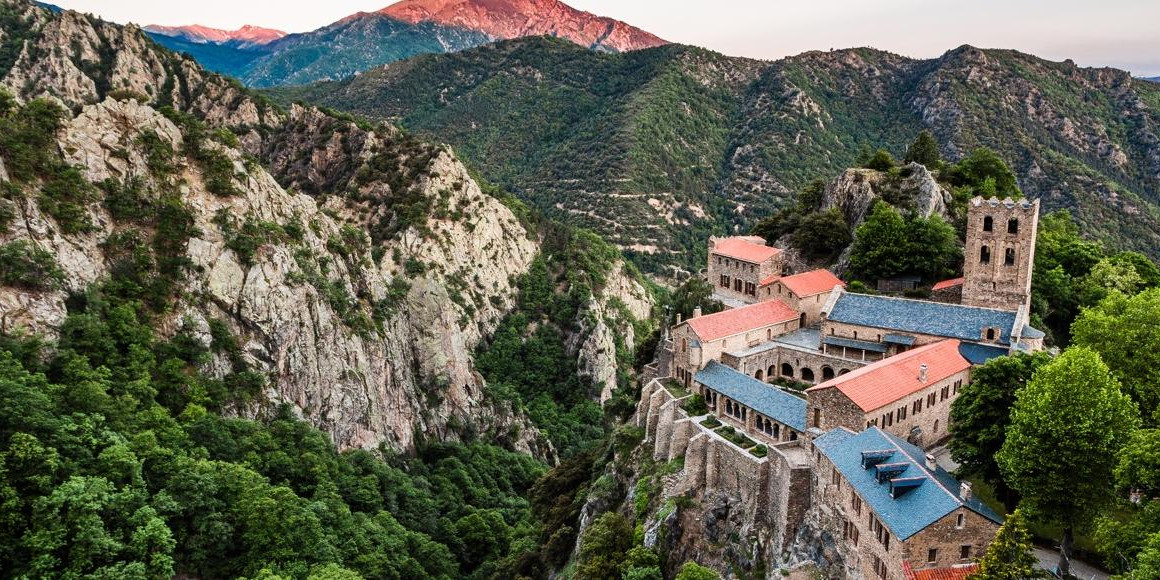
The Canet-en-Roussillon region, where our 4-star campsite is located, boasts an exceptional historical heritage with Romanesque monuments that have stood the test of time without too much damage. Some buildings are even classified as Historic Monuments. If you love history and old buildings, make the most of your stay at our campsite in the Pyrénées-Orientales to discover the Romanesque heritage of Roussillon.
Origins and characteristics of Romanesque art
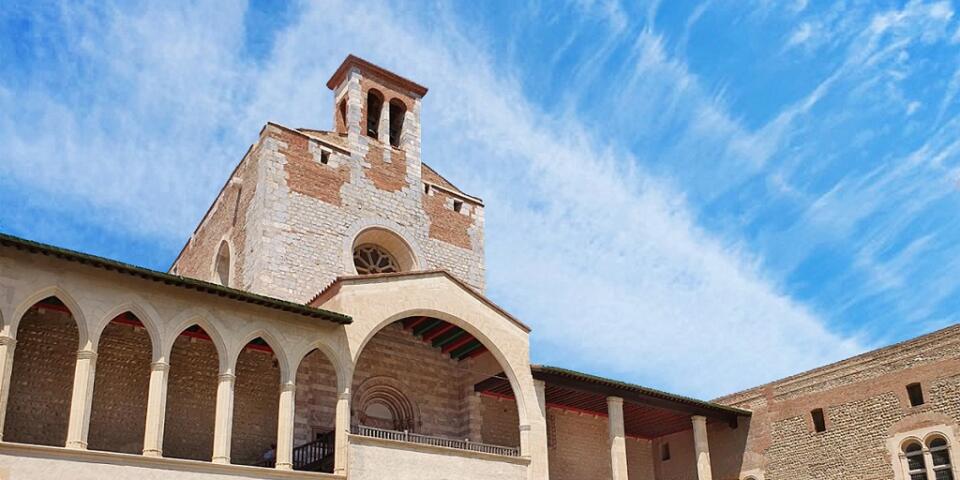
From the 6th to the 10th century, what we now call pre-Romanesque art dominated. Romanesque art, meanwhile, began in the 10th century and continued until the second half of the 12th century. This included architecture as well as sculpture and painting.
Romanesque art was succeeded by Gothic art. In architecture, this resulted in brighter and less massive monuments thanks to new techniques: flying buttresses, ribbed vaults, and pointed arches. The Palace of the Kings of Majorca in Perpignan, for example, is a Gothic-style monument.
The pink marble of Villefranche-de-Conflent
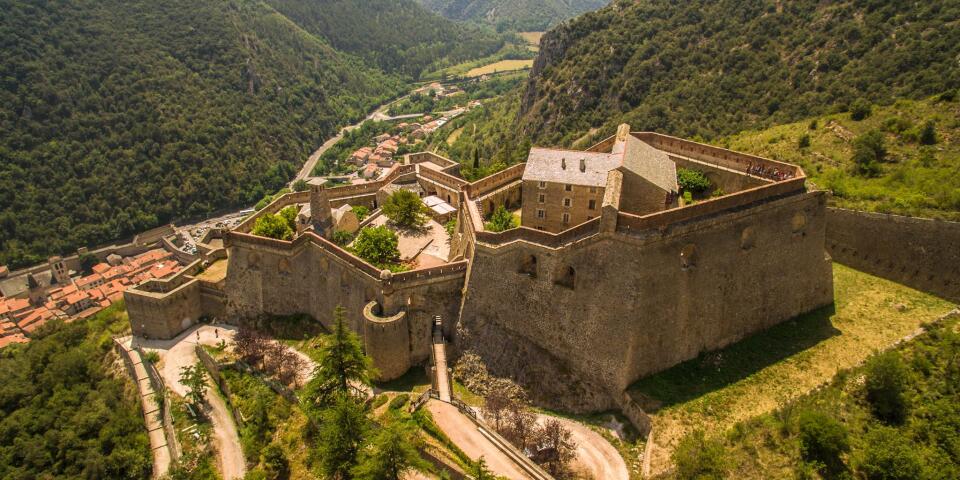
Ranked among the most beautiful villages in France, the small medieval town of Villefranche-de-Conflent boasts a remarkable historical heritage. As you stroll through its narrow streets, you can admire Romanesque and Gothic monuments as well as military constructions designed by Vauban. It's like taking a journey through time. The village is also the starting point for the little yellow train, a true symbol of the Catalan Pyrenees.
Villefranche-de-Conflent is dominated by its famous pink marble. The churches of Saint-Jacques, Saint-André de Belloc, and Saint-Étienne de Campelles are fine examples of Romanesque architecture.
Saint Martin Abbey of Canigou
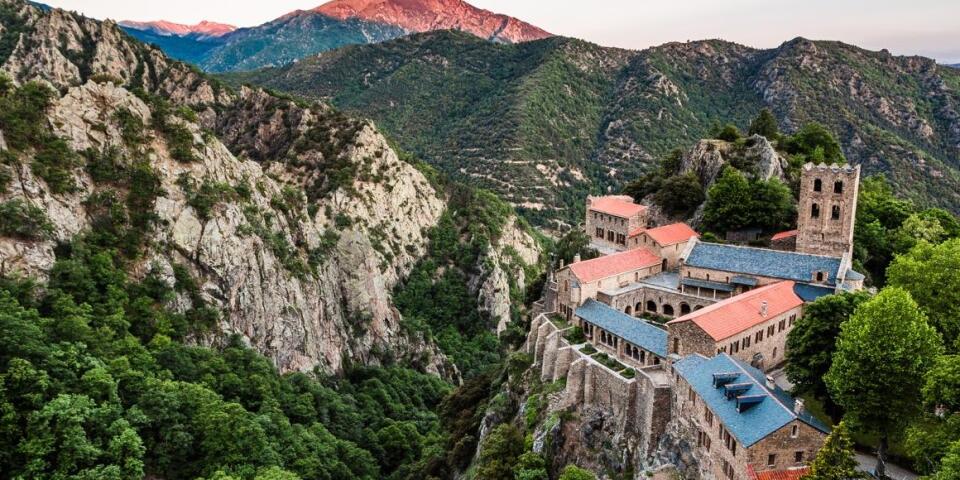
The Abbey of Saint-Martin du Canigou overlooks the village of Casteil. Founded by Benedictine monks in the 10th century, this monastery is classified as a Historic Monument. From Casteil, it takes between 30 minutes and an hour to walk to this jewel of Romanesque heritage, depending on your fitness level. It is still in use today.
Founded in the early 11th century, Saint-Martin du Canigou Abbey has no less than 1,000 years of history. Located in the heart of nature, the monument offers a magnificent view of typical Romanesque architecture.
The Abbey of Saint-Michel de Cuxa
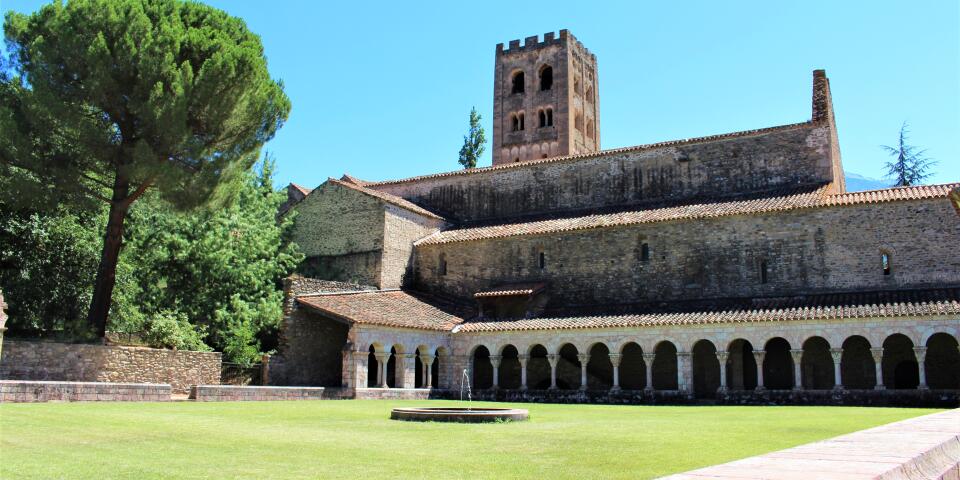
Construction of this remarkable site in Codalet began in the 10th century with the pre-Romanesque church, which is also the largest of its kind preserved in France. The Romanesque style is recognizable by the use of horseshoe arches. Subsequently, many other pre-Romanesque buildings were constructed. However, only the bell tower and crypt remain today. In the 12th century, a Romanesque cloister was built, whose beautiful sculptures can still be admired today.
Other Romanesque monuments may also be of interest to you, such as the priory of Serrabone or the Romanesque sculpture center in Cabestany.
During your stay at our campsite in Roussillon, discover the heritage of the Pyrénées-Orientales region and its many historic monuments that are not to be missed.